
Back to Basics: Notes From an Earlier Self
I’ve been feeling nostalgic lately...and I find myself looking back and wondering what my younger self understood easily that my adult self has made more complicated.
As I revisit old music, photos, films, and the things that interested me before I had language for why, I’ve become curious about the evidence of who I was, from the things I liked before I knew what was considered good. It has started to feel like research and development, except the subject under development is me.
It’s audacious the way we are taught to think about the past. We assume that because we have moved forward in time, we have improved upon everything behind us. Newer means more advanced, faster means more efficient, and convenience means progress. To be clear, I am not interested in romanticizing the past; I’m aware that nostalgia can be a generous editor. Social attitudes, inequalities, and entire ways of living belong exactly where we left them. But progress and wisdom are not synonymous.
Perhaps, improving a tool can make our experience worse. A camera can take many pictures, but we often spend less time thinking about which moments are worth capturing. We may not be nostalgic for the objects themselves, but maybe for the actions they encouraged. So, what do we really miss when we think about the past?
Now that I’m in my personal R&D, I’ve been noticing the many things that keep returning. CDs, point-and-shoot cameras, and basically, anything Y2K. The favors of previous decades keep cycling back. Some of this is simply commerce doing what it does, because capitalism has always been good at turning desire into a product, and nostalgia is no exception. But I wonder if the desire for these things says something beyond what’s trendy. We may not only be trying to recreate the past; we’re also looking for something we lost.
I’ve been thinking about this while reading What They Forgot to Teach You at School by The School of Life. It begins with a premise I find increasingly relevant as I get older; we can spend years receiving a formal education while remaining largely responsible for teaching ourselves how to understand our own lives. No classroom can fully prepare us for everything, especially the work of knowing ourselves. If self-knowledge is something we have to develop, then our own lives are part of the curriculum.
The things I wore, watched, collected, read, and obsessed over, as well as those I eventually let go of, have helped me understand who I was at different stages of my life and how the world shaped me. My younger self didn’t have some purity that adulthood destroyed; she was influenced too. She watched television, read magazines, and wanted things because other girls had them. She was wrong about a lot and would probably be terrified to know that I am now analyzing her choices for philosophical understanding.
She knew when music made her want to move and when an outfit made her feel like herself. She knew how to become fixated with something without first asking whether the fixation was productive. Adulthood gave me discernment, but it also gave me explanation. And I became very good at explaining myself; why this career made sense, why this opportunity was useful, why this purchase was worth it, why something was practical, strategic, responsible, or good for me. Reasoning through our choices has value, which is why returning to the basics has been useful for me lately.
In dance, the basics aren’t what you abandon once you become advanced. You return to them because you are advanced enough to understand their importance. The barre in ballet class doesn’t become irrelevant because you can perform more difficult steps. Therefore, expertise doesn’t eliminate the foundation. It changes your relationship to it. So, why should becoming a person be any different?
We often think of growth as a way to dismiss who we used to be. We celebrate starting over and reinventing ourselves; however, I’m starting to think that each earlier version of myself was just an unfinished draft of who I am today. My past self had an understanding that I sometimes miss, while I have knowledge she didn’t have.
What parts of myself do I love now? Which instincts have become clearer to me through experience, and which ones have I let go of as I’ve learned more about myself? What wisdom from my family did I once think was out of date? What parts of my culture did I give up for modern ideas? And what did I abandon just because I thought there was a better choice?
I have spent much of my adult life focused on the future; building, growing, and wondering what comes next. There is nothing wrong with that. However, as I reflect on the person I once was, I’m less inclined to judge her for what she didn’t know and increasingly curious about what she did.
She has no idea what lies ahead, and I wouldn’t trade the lessons I learned to shield her from learning them. However, I’ve stopped looking at every earlier version of myself as someone I needed to outgrow. Some of them left notes, and I believe I’m finally old enough to apply them.
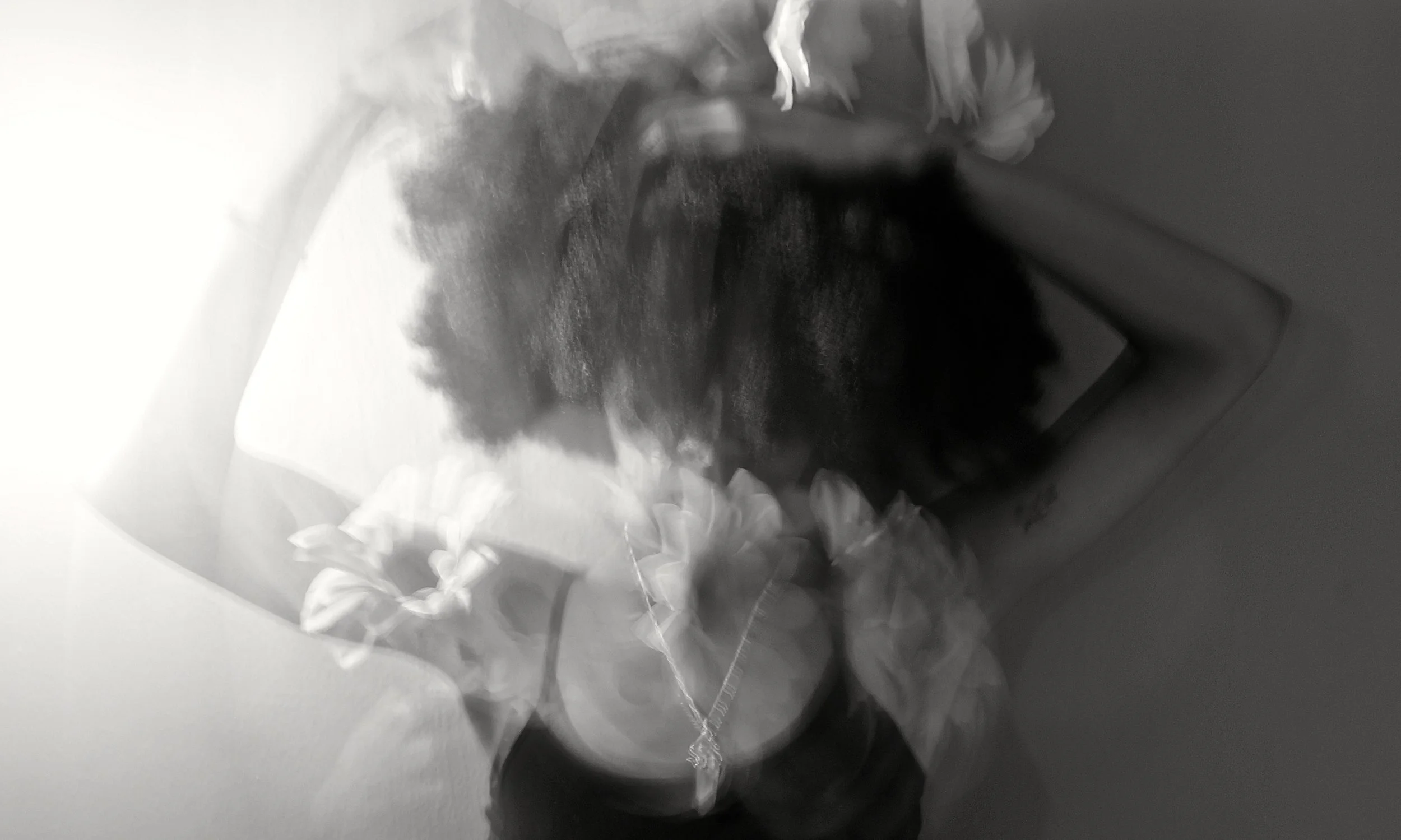
Self Portrait, 2014